


Choosing the best Trampoline Mat in 2026 starts with fit, not a flashy product description. A replacement mat must match your trampoline’s frame size, spring count, spring length, and attachment layout. Measure the frame carefully and compare those details with the manufacturer’s specifications. A mat that looks close may still attach unevenly or leave unsafe gaps. Small mismatches matter.
Material and construction deserve equal attention. Look for clear information about fabric type, UV resistance, stitching, and reinforced attachment points. These details can affect how the mat handles sun exposure, repeated jumping, and ordinary wear. Still, product claims are not proof of long-term performance. Check warranty terms, return conditions, and reviews that describe actual use over time. Looks can mislead.
This guide will compare common mat materials, explain how to verify compatibility, and identify signs of wear that may call for replacement. It will also separate the jumping mat from the safety enclosure and perimeter padding, which serve different purposes. That is not enough. Before buying, consult your trampoline’s manual or contact its manufacturer when measurements or model details are unclear. Avoid assuming that a universal label guarantees a safe fit. The best choice is the one suited to your specific frame, household use, and outdoor conditions—not necessarily the most expensive option. Even careful measurements can be imperfect, so take them twice and inspect the installed mat before anyone jumps.
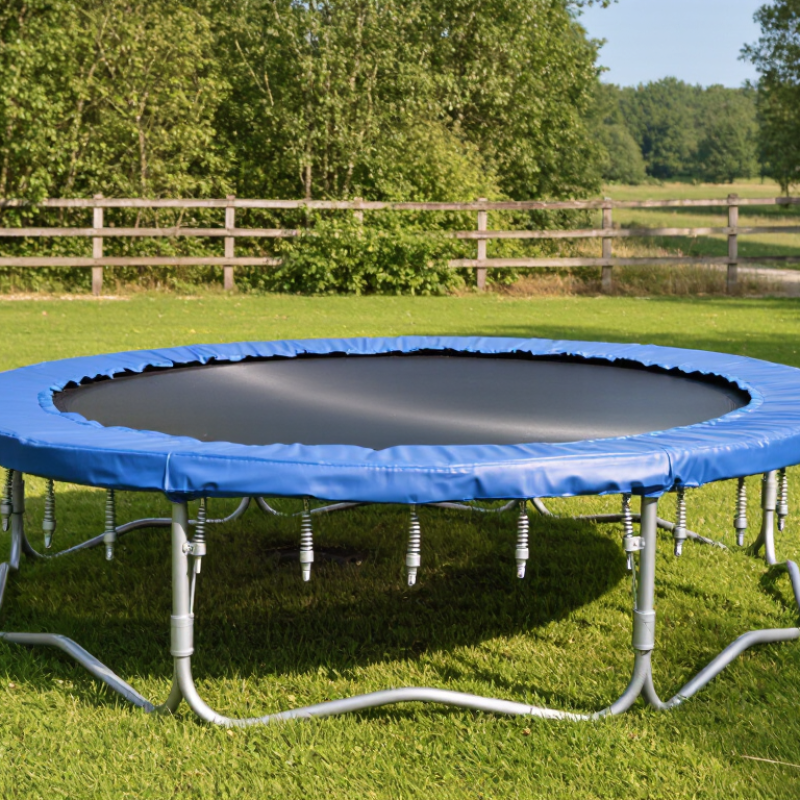
A trampoline mat is the jumping surface, but its weave and attachment style both affect performance. Most outdoor mats use tightly woven polypropylene mesh. Small openings let rain drain while supporting repeated jumps. A denser weave can feel firm and controlled; a more open weave may feel softer, depending on tension and spring setup. That matters.
Some mats attach to metal springs through reinforced fabric loops. Others connect to the frame with elastic cords or integrated bands, creating a different feel and requiring a matching frame design. These systems are not interchangeable. Before buying a replacement, check the mat’s diameter, attachment-point count, and loop spacing. A close visual match is not enough.
The mat helps distribute a jumper’s weight and return energy, but it does not make a trampoline safe by itself. Torn stitching, stretched loops, or UV-damaged fabric can weaken support, even when the center still looks usable. I would not judge by bounce alone. Inspect the seams and attachment points, and confirm the frame and spring cover fit correctly. Not always. A softer landing can feel appealing, yet excessive sag or uneven tension may signal a poor match rather than a better mat.
What Is the Best Trampoline Mat to Buy in 2026?
Measure the metal frame, not the fabric mat. Measure straight across the frame’s center, from outer edge to outer edge, then repeat at a right angle. The numbers should be close. A small mismatch may mean the frame is slightly out of round, or the tape slipped. Use the frame diameter specified for the replacement mat, rather than guessing from the old mat’s stretched edge.
Count every spring on the trampoline and every V-ring on the mat. These counts must match exactly: each spring attaches to one V-ring. A mat with the right diameter but the wrong ring count will not fit properly. Also check the spring length and hook style against the existing springs; matching counts alone cannot confirm compatibility. If possible, remove one spring and measure it from hook to hook while relaxed. It is easy to misread a stretched or damaged spring, so compare several if their lengths look uneven.
Tips: Write down the frame diameter, spring count, and spring length before shopping. Count twice. I once trusted an old parts note and had to recheck the whole setup.
Check both fit requirements before buying a replacement mat.
Both checks are required: measure the frame diameter using the seller’s specified method, and make sure the mat’s V-ring count equals the trampoline’s spring count. Confirm the mat’s measurements and attachment details against your trampoline; diameter alone does not guarantee a fit.
A trampoline mat’s mesh should feel firm, not brittle, with evenly spaced openings and no loose strands. Openings that are too wide may catch toes, while dense mesh can retain leaves and moisture. Check the weave in daylight; thin spots are easier to see against a bright background. Small details matter. Mesh alone does not determine bounce, so compare the mat’s size and spring layout with your frame.
Inspect stitching where the fabric meets the V-rings. Look for consistent rows, reinforced attachment points, and no skipped or fraying threads. UV resistance matters if the trampoline stays outdoors. Seek specific information about fabric treatment or tested exposure, rather than relying on a vague “weather-resistant” label. Sunlight can fade material before obvious tearing appears.
Manufacturer-listed load ratings also need careful reading: confirm whether the figure applies to the mat or the complete trampoline, and whether it describes one user or total load. Ratings are not a reason to jump beyond the manual’s limits. I would check the seams and fabric regularly, even on a new mat; inspection can feel fussy, but wear is not always obvious from above.
Choosing the best trampoline mat in 2026 starts with fit, but safety claims deserve closer checking. ASTM F381-23 covers consumer trampoline components, assembly, use, and labeling. It is not a simple quality badge for a loose mat. Ask which trampoline model the claim covers and whether the evidence applies to the complete setup or only one component.
Check the mat’s diameter, spring count, and attachment style against your frame. A mismatch can leave gaps or pull the stitching unevenly. Look for clear documentation tied to the exact product, including the standard edition and test scope. ASTM publishes standards; it does not automatically certify products. Vague phrases like “ASTM approved” deserve follow-up questions.
Inspect the seams and spring openings in good light. Look for fraying, loose stitches, and brittle fabric, especially on a used mat. Ask about weather exposure and care instructions, too. No claim replaces regular checks. Even a careful checklist has limits: a mat may look fine while hidden stitching is wearing down. That uncertainty matters. A replacement should fit the frame precisely and be supported by evidence that is specific, readable, and current.
The best replacement mat is one that fits the specific trampoline frame and spring system, has sound construction, and is supported by clear, verifiable safety documentation. A mat alone cannot establish that an entire trampoline complies with a safety standard.
| Buying dimension | What to check | Evidence and safety relevance |
|---|---|---|
| Frame and mat fit | Match the replacement mat to the trampoline’s specified frame size and shape. Follow the manufacturer’s measurement method rather than relying on a retailer’s “fits” description alone. | A mismatch can affect tension and attachment. Confirm compatibility with the trampoline’s model or measured frame before ordering. |
| Spring count and length | Check the number of attachment points and the spring length specified for the trampoline. Measure springs only as directed by the manufacturer, since measurement methods can differ. | The mat must connect correctly to the existing spring system. Similar frame diameters do not guarantee that spring count or spring length is compatible. |
| Attachment points and stitching | Inspect the number, spacing, and construction of the mat’s attachment points. Look for intact, evenly finished stitching and no visible tears, loose seams, or damaged loops. | Attachment construction is part of the connection between the jumping surface and frame. Ask the seller for product-specific construction details if they are not provided. |
| Material and outdoor exposure | Check the material description and any documented resistance to ultraviolet exposure, moisture, or weathering. Follow the product’s care, inspection, and replacement instructions. | Marketing terms such as “weather-resistant” are not, by themselves, proof of a specific test result or service life. Prefer claims that identify the test method and supporting documentation. |
| Safety documentation | Ask what was evaluated, by whom, and whether documentation applies to the complete trampoline, the replacement mat, or only a particular component. | ASTM F381-23 is a consumer trampoline safety specification. A statement that a mat is “ASTM compliant” should be supported by documentation identifying the applicable product and evaluation; a mat claim alone does not demonstrate compliance of the assembled trampoline. |
| Warnings and instructions | Check that the supplied instructions explain compatible use, installation, inspection, and any applicable warnings. Keep instructions with the trampoline after installation. | ASTM F381-23 addresses consumer trampoline safety requirements that include components, assembly, use, and labeling. Verify claims against the current standard text and product-specific records. |
| Condition and replacement | Before each use, check the mat and its attachment points for tears, worn areas, failed stitching, or other damage. Replace damaged parts with compatible components and follow the trampoline maker’s instructions. | No material label or safety claim eliminates the need for regular inspection. Do not use a trampoline with a damaged jumping surface or insecure attachments. |
| Practical buying decision | Choose a mat with confirmed compatibility, clearly described construction, accessible instructions, and safety claims that can be substantiated. | There is no universally best mat: the correct fit for the specific trampoline and credible product documentation matter more than an unsupported “best” or “ASTM certified” label. |
Standard reference: ASTM F381-23, Standard Safety Specification for Components, Assembly, Use, and Labeling of Consumer Trampolines. Consult the current standard and the trampoline manufacturer’s instructions when evaluating a specific product.
A useful 2026 ranking should start with verified fit, not appearance or price. Check the trampoline’s frame diameter, spring count, spring length, and attachment style against the mat’s stated specifications.
Fit comes first.
A mismatch of even a few spring loops can leave the mat slack or difficult to install. Compare measurements with the frame’s actual dimensions, since older models and replacement frames may differ from catalog descriptions.
Warranty terms deserve a close read. Check whether coverage applies to the mat itself, and note exclusions for sun exposure, wear, or installation errors.
Proof matters. Give more weight to clear written terms than to broad promises.
Replacement-part availability is another practical measure: look for matching springs, attachment components, and a stated restocking or shipping timeframe. A part listed online may still be unavailable when needed.
Stock can change.
Rank mats higher only when fit details, warranty conditions, and replacement options can be checked from reliable product information. Some listings leave gaps, and that uncertainty should count against them.
Before ordering, measure twice and keep a record of the mat’s dimensions and spring count.