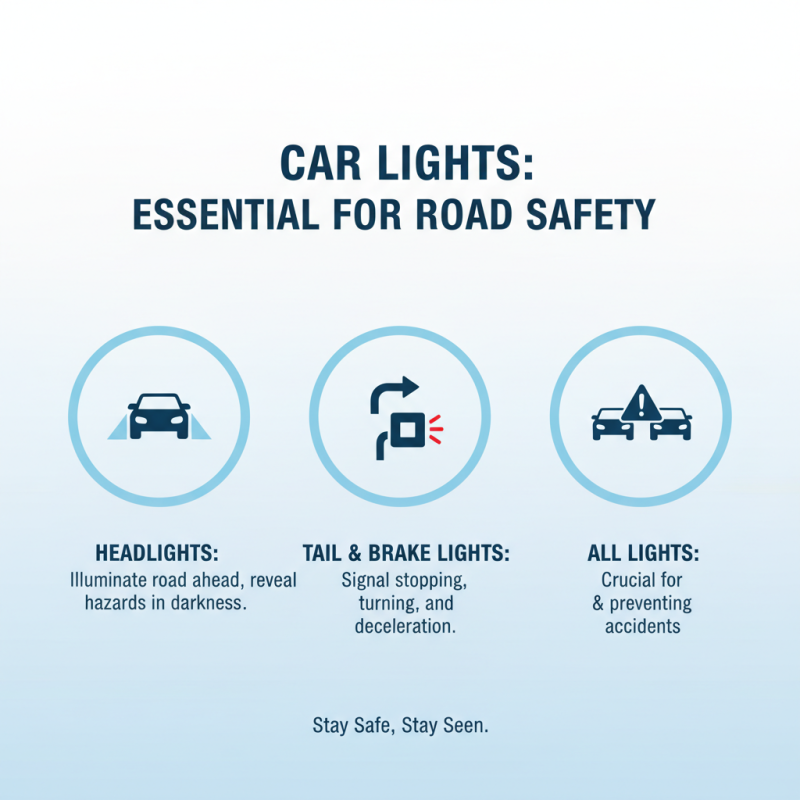
Why Are Car Lights Essential for Road Safety?
Car lights play a critical role in ensuring road safety. According to the National Highway Traffic Safety Administration (NHTSA), nearly 50% of all traffic fatalities occur at night. Proper car light usage can greatly reduce these incidents. Renowned automotive lighting expert, Dr. Emily Harper, states, "Effective car lighting is a key factor in preventing nighttime accidents."
Many drivers underestimate the impact of their car lights. Dim or malfunctioning headlights can obscure vision and lead to dangerous situations. Nearly 20% of drivers do not regularly check their lights, according to a recent survey by the Automotive Safety Research Institute. This negligence contributes significantly to road accidents after dark.
Effective car lights are not just about brightness. They enhance visibility for both drivers and pedestrians. Improved visibility can help in reducing blind spots and ensuring that road hazards are noticed sooner. However, many still overlook the simple act of maintaining their light systems. A little attention to these details can make a meaningful difference in road safety.
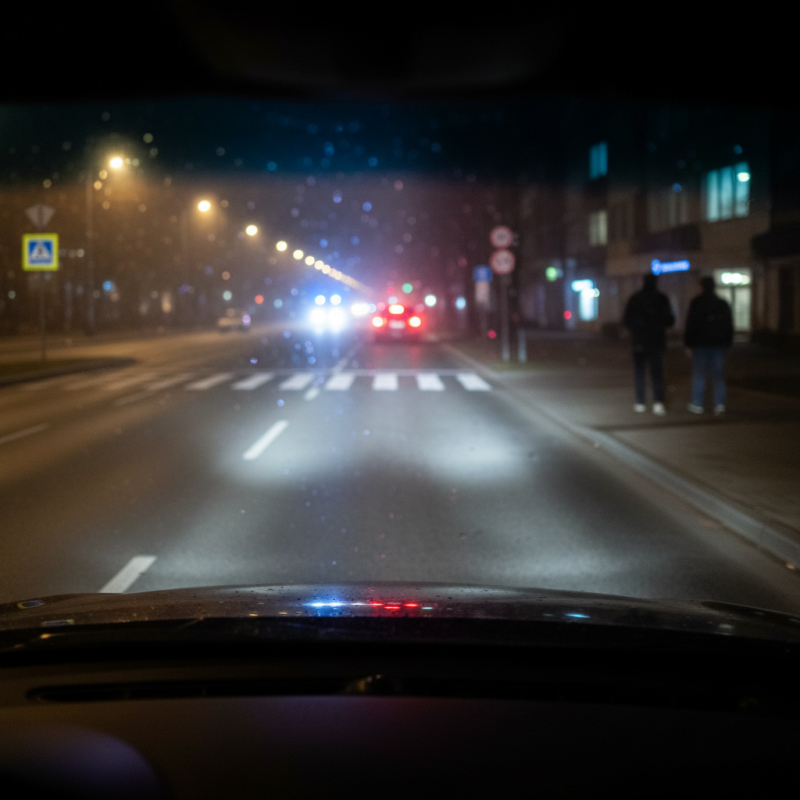
Importance of Car Lights in Ensuring Driver Visibility
Car lights play a critical role in ensuring driver visibility. Proper illumination helps you see obstacles in the dark. It also alerts other drivers to your presence. Without working lights, danger looms on every corner. Many accidents happen due to inadequate lighting.
Consider using your car lights even during the day. Fog, rain, or dust can limit visibility. Remember to check your headlights regularly. A simple bulb replacement can make a huge difference. Pay attention to your brake lights too. They must illuminate brightly for safe driving.
Tips for better visibility: Always clean your headlights. Dirt and grime can obscure their shine. Adjust the angle of your lights if they seem off. Proper alignment ensures the best coverage ahead. Trust your instincts; if something feels wrong, it often is. Regular checks can help avoid unfortunate surprises on the road.
Why Are Car Lights Essential for Road Safety?
| Type of Light |
Purpose |
Visibility Range (meters) |
Impact on Safety |
| Headlights |
Illuminates the road ahead |
50-150 |
Essential for night driving and poor weather |
| Taillights |
Indicates vehicle presence |
30-70 |
Prevents rear-end collisions |
| Turn Signals |
Indicates direction of travel |
30-50 |
Critical for safe lane changes |
| Fog Lights |
Reduces glare in foggy conditions |
30-50 |
Improves visibility in adverse weather |
| High Beam Lights |
Increases forward visibility |
150-300 |
Useful on dark, unlit roads |
Legal Requirements for Car Lights in Different Regions
Car lights play a crucial role in ensuring safety on the road. Different regions have specific legal requirements regarding vehicle lighting. For example, in many places, cars must have functioning headlights and taillights. These lights enhance visibility during poor weather and dark hours. They help prevent accidents by allowing drivers to see and be seen.
In some regions, additional lights are required. Fog lights are mandatory in areas prone to heavy fog. Turn signals must be bright enough to alert other drivers. The rules can vary significantly from one region to another. Some areas even have regulations on the color and brightness of lights. Understanding these laws is vital for staying safe and legal.
Yet, compliance isn't just about legality. Many drivers overlook the importance of checking their lights regularly. A burned-out bulb can lead to dangerous situations. It's easy to assume that all lights are functioning. However, taking a moment to inspect can save lives. Being aware of your region's requirements ensures that you contribute to safer roads.
Importance of Car Lights in Road Safety
Impact of Poor Lighting on Accident Rates and Driver Response
Car lights play a crucial role in ensuring road safety. Poor lighting conditions can significantly increase accident rates. According to a report from the National Highway Traffic Safety Administration, approximately 50% of all fatal crashes occur at night. Without adequate lighting, drivers may struggle to see pedestrians, cyclists, and road signs. A lack of visibility can lead to split-second decisions resulting in tragic accidents.
Moreover, statistics reveal that up to 70% of night-time crashes are caused by visibility issues. A driver could misjudge stopping distances or overlook hazards entirely in dim light. The impact of malfunctioning or weak car lights can be disastrous. Many drivers fail to check their lights regularly, leading to a dangerous reliance on inadequate visibility. This negligence is a pressing concern.
Drivers need to understand how vital proper lighting is. Furthermore, the darkness of night presents challenges that many underestimate. Studies indicate that reaction times can increase by as much as 25% without proper illumination. Consequently, poor lighting not only endangers the driver but also all road users. Improving lighting must become a priority for all vehicle owners.
Maintenance Tips for Ensuring Car Lights Function Effectively
Car lights play a vital role in road safety. Regular maintenance ensures they work efficiently. Here are a few tips to help you keep your car lights in top shape.
Check your headlights and brake lights regularly.
Make it a habit to check them at least once a month. A simple visual inspection can help catch a burned-out bulb. If a light is dim, replace it. You might be surprised how much a new bulb brightens your drive at night. Remember, clear lenses are important too. Dirty or foggy lenses can severely reduce visibility.
Another key tip involves the electrical connections. Corroded or loose connections can lead to flickering lights and eventual failure. Ensure they are clean and secure. It’s not just about functionality; it’s about safety. Always test your lights in different weather conditions. Rain or fog can change visibility drastically. Stay proactive, and don't wait for problems to arise.