How to Choose the Right Automotive Lighting for Your Vehicle?
Choosing the right automotive lighting is crucial for any vehicle owner. Proper lighting can enhance visibility and safety on the road. It’s not just about brightness; it involves understanding different light types and their purposes.
When selecting automotive lighting, consider your driving needs. For instance, halogen bulbs provide warm light but may not last long. In contrast, LED lights are energy-efficient and have a longer lifespan. You must also choose between headlights, fog lights, and taillights based on specific requirements.
One might feel overwhelmed by the options available. It’s easy to overlook important details like color temperature or beam patterns. Many drivers find themselves regretting their initial choices after dark drives. Take your time to research, and don’t settle for the first option that looks good. The right automotive lighting can transform your driving experience and promote safety.
Understanding the Different Types of Automotive Lighting Available
When choosing automotive lighting,
it’s essential to understand the types available. Headlights are crucial for night driving.
Halogen, LED, and HID lights offer different benefits.
Halogen is the most common and easy to replace. They produce a warm light
but consume more energy. LEDs are long-lasting and energy-efficient.
They can be brighter but may have a higher initial cost.
HID lights provide excellent brightness and visibility
but can be complicated to install.
Tips for choosing headlights:
Consider the brightness you need. Some drivers prefer a softer light, while others want maximum visibility.
Test driving different options can help make the right choice.
Also, check local regulations on light color and brightness, as this can influence your decision.
Fog lights can also be a game-changer. They illuminate
the road close to the vehicle, reducing glare in foggy or rainy conditions. However, installing them incorrectly
can cause problems. Ensure they are aligned properly to avoid blinding other drivers.
Reflect on your driving habits. Do you often drive in harsh conditions?
If so, consider upgrading to specialized lights.
Factors to Consider When Choosing Automotive Lighting for Your Vehicle
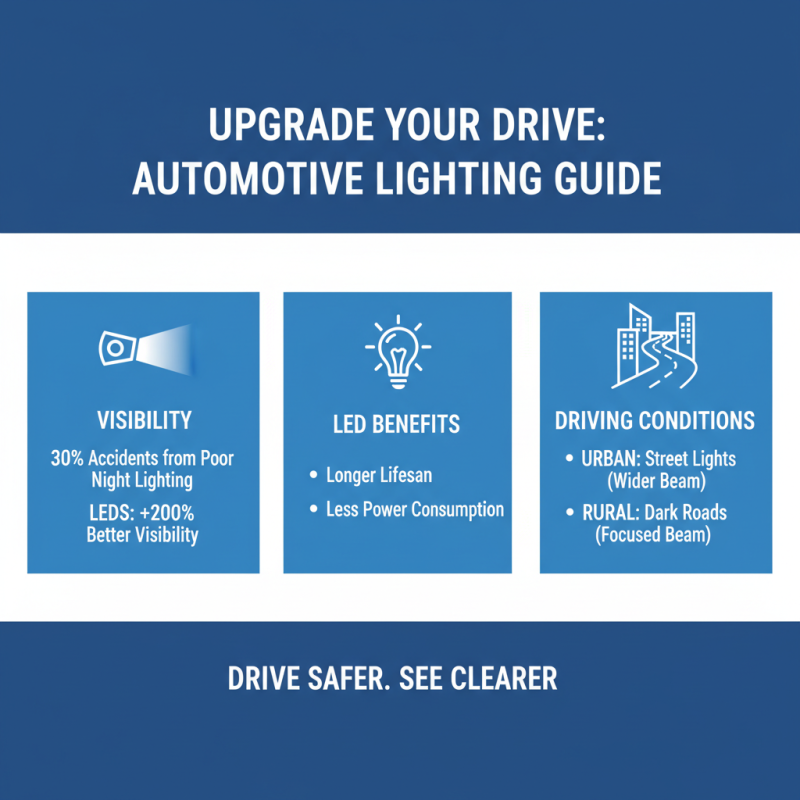
Choosing the right automotive lighting can greatly enhance your driving experience. One crucial factor is visibility. Reports indicate that poor lighting contributes to 30% of traffic accidents at night. Upgrading to LED lights can improve visibility by up to 200%. This kind of lighting lasts longer and consumes less power. It's vital to evaluate your typical driving conditions. Do you drive in urban areas or rural settings? Each situation may require different lighting solutions.
Another essential aspect is compatibility. Ensure that the lighting system matches your vehicle's make and model. Not all lights fit all vehicles, and improper installation can lead to hazardous situations. Also, keep in mind the color temperature. While 6000K lights provide a bright white light, they may not be ideal for every driver. Some studies suggest that softer white light reduces eye strain during long drives.
Lastly, consider your budget. Investing in quality lighting can save you money in the long run. However, not all expensive options are necessary. Reflect on your needs and the types of driving you'll be doing. A quick, suitable upgrade might be all you need. Remember, lighting can impact safety and comfort, so make your choices wisely.
The Importance of Brightness and Color Temperature in Automotive Lighting
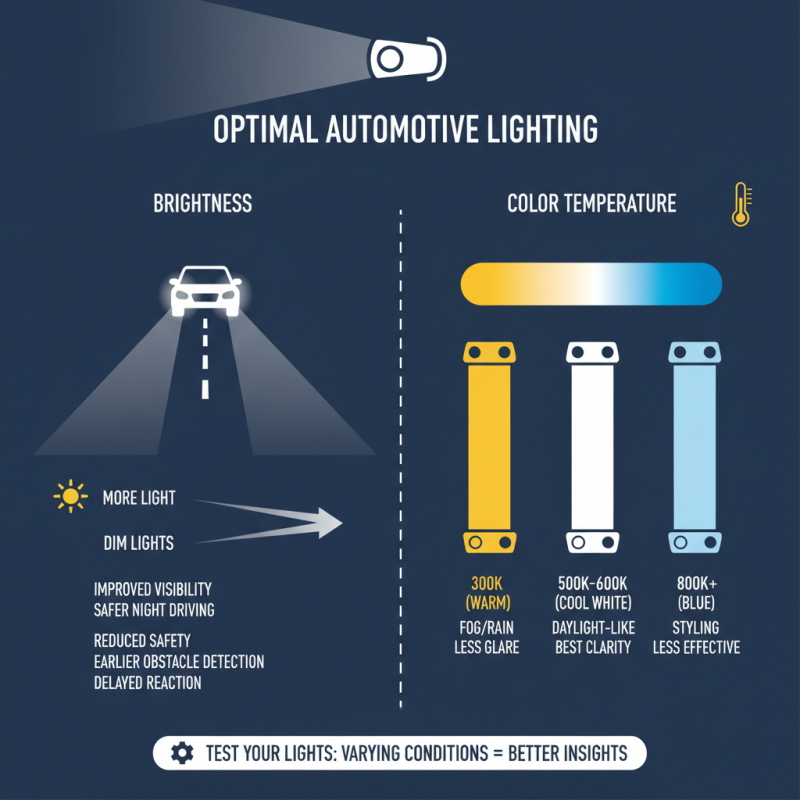
When choosing automotive lighting, brightness and color temperature are crucial factors. Brightness affects visibility and safety on the road. Dim lights can make it difficult to see obstacles or pedestrians, especially at night. You may feel comfortable with your current lights, but are they bright enough? Testing your lights in various conditions can provide valuable insights.
Color temperature is another important aspect. It determines how warm or cool the light appears. Cooler lights, closer to daylight, enhance contrast and visibility. This can improve reaction times when driving at night. However, some drivers may find cooler temperatures to be harsh. Personal preference plays a role here, so experiment with different options.
Choosing the right lights can sometimes feel overwhelming. The market is flooded with options, and it's easy to get lost. Are you prioritizing style over functionality? What might seem appealing visually may not be the best for safety. Take the time to reflect on your driving habits and needs. This approach can lead to more informed decisions. Ultimately, the goal is to enhance both safety and comfort on the road while finding the balance that suits you best.
Regulations and Legal Requirements for Automotive Lights
When selecting automotive lighting, it's essential to understand regulations and legal requirements. Each region has specific laws governing the types of lights allowed on vehicles. These laws ensure safety and reduce accidents. For instance, headlight brightness is often regulated to prevent glare for other drivers. It’s crucial to check local regulations to avoid fines.
Different types of lights serve distinct purposes. Brake lights must be bright and clearly visible. Turn signals need to blink at an appropriate rate. However, not all aftermarket options meet legal standards. Some may look appealing but could result in legal trouble. Checking for proper certification can save you hassle.
Consider the implications of non-compliance. Installing lights that don’t adhere to regulations could lead to penalty fines. More importantly, inadequate lighting can cause accidents. A well-lit vehicle enhances visibility, which is vital for road safety. It's better to be safe than sorry when making lighting choices.
Installation and Maintenance Tips for Automotive Lighting Systems
When installing automotive lighting, there are several key points to consider. Ensure you choose lights that are compatible with your vehicle. Check the wattage, size, and color temperature. Installing the wrong type can lead to electrical issues. Take your time during installation. Rushing can cause mistakes. Make sure all connections are secure to avoid flickering lights.
For maintenance, regularly inspect your lights. Look for any signs of wear or corrosion. If a bulb burns out, replace it promptly. Neglecting a burnt-out bulb can reduce your visibility. Clean the lenses often. Dirt and grime can dim your lights significantly. Using proper cleaner and a soft cloth is best.
Consider your driving conditions. If you often drive at night or in bad weather, brighter lights may be necessary. However, be careful of blinding other drivers. Adjust your aim properly. Misaligned lights can lead to accidents and reduced visibility. Reflect on how your lighting choices affect others on the road.
How to Choose the Right Automotive Lighting for Your Vehicle