What Are China’s Top Site Lighting Manufacturers?
Choosing the top site lighting manufacturers requires more than comparing product catalogs. A reliable assessment considers optical performance, durability, controls, service, and real project results. Parking lots, distribution yards, campuses, and public streets all create different demands. A fixture that performs well on a 30-foot pole may fail beside a low pedestrian path.
James Benya, a respected lighting designer and author, offers a useful principle: “Good lighting is not about making things brighter; it is about making them clearer.” That idea guides this overview. Strong manufacturers should provide accurate photometric files, tested lumen output, glare control, and practical installation support. Certifications such as DLC, UL, CE, or regional equivalents also deserve attention. So do IP ratings, warranty terms, corrosion resistance, and compatibility with networked controls.
This guide examines recognized companies such as Acuity Brands, Cooper Lighting Solutions, Current, Schréder, Thorn, and Cree Lighting. The list is not absolute. Regional availability changes. Newer suppliers may also deliver excellent value, especially for customized projects. A familiar brand can still be a poor fit when its optics, mounting options, or controls do not match the site.
Field experience matters. Dust on a lens, water near a junction box, or glare across a driver’s windshield can reveal weaknesses that brochures hide. Energy savings matter too, but safety and visual comfort should not be reduced to a spreadsheet. The best site lighting choice balances measurable performance with human judgment. That balance is imperfect, but it is worth examining carefully.
What Is Site Lighting and Why Does Manufacturer Selection Matter?
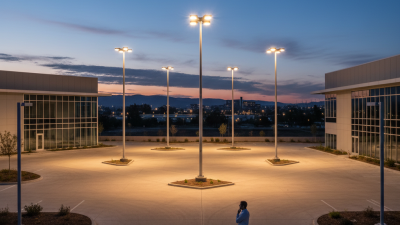
Site lighting provides temporary or permanent illumination for construction zones, loading areas, roadworks, and large outdoor facilities. It helps workers see uneven ground, equipment, access routes, and warning barriers after daylight fades. Good lighting is not simply about maximum brightness. Excessive glare can hide hazards and disturb nearby homes, drivers, or neighboring crews.
Manufacturer selection matters because site conditions are demanding. A dependable supplier should provide clear photometric data, tested ingress protection, impact resistance, and stable color performance. Ask whether fixtures can withstand dust, rain, vibration, and repeated relocation. Check mounting options too. A light that looks powerful on paper may create dark patches when installed ten meters above ground. That mistake is common.
Experienced project teams also examine wiring, battery duration, thermal management, spare parts, and technical support. Certification should match the installation country and intended environment. Documentation must be easy to verify, not vague marketing language. During a site trial, measure illumination at ground level and inspect glare from a worker’s viewpoint. A lower-wattage fixture may perform better when its beam is controlled. Cost still matters, but the cheapest unit can become expensive after frequent failures, replacement labor, and delayed work. I have seen specifications change after rain, dust, and winter temperatures exposed weaknesses. That is why a small pilot installation is useful, even when the schedule feels tight. Manufacturers should welcome testing and explain limitations honestly. geschniegelt
How Are China’s Top Site Lighting Manufacturers Classified?
China’s top site lighting manufacturers are best classified by capability, not factory size alone.
The main groups include roadway lighting specialists, industrial high-bay producers, solar-powered outdoor lighting suppliers, and portable construction-lighting makers. Some factories cover several categories, which makes simple rankings imperfect.
A more reliable classification examines product engineering, project experience, and testing evidence. Engineers should review photometric files, beam angles, glare control, heat dissipation, and driver protection. IP65 or IP66 protection matters on dusty construction sites and during heavy rain. Compliance with IEC 60598 requirements can strengthen technical credibility. The U.S. Department of Energy reports that LED products use at least 75% less energy than incandescent lighting and can last up to 25 times longer. That makes thermal design and service life important selection factors.
Manufacturers can also be divided by production depth. Some assemble imported modules, while others control die casting, PCB assembly, optical design, aging tests, and final inspection. The IEA reported that LEDs represented roughly half of global lighting sales in recent years, showing how quickly solid-state lighting has become mainstream. Still, sales data does not prove field reliability. Buyers should request test records, sample consistency checks, and clear warranty terms. One overlooked detail is maintenance access. A bright lamp is not enough when replacing its driver requires removing half the fixture. No classification is perfect. Site conditions always expose weaknesses.
Which Product Features Distinguish Leading Chinese Manufacturers?
China’s leading site lighting manufacturers distinguish themselves through measurable product performance, not polished catalogs alone. Their fixtures often use sealed housings with IP66 or IP67 protection, helping resist rain, dust, and pressure washing. Strong impact ratings also matter near loading bays and public walkways. In practical installations, a rugged lens is not enough. Cable glands, gaskets, and mounting brackets must survive repeated vibration.
Optical control is another important difference. Better manufacturers offer precise beam patterns, lower glare, and stable color temperatures for roads, yards, and industrial sites. High color rendering can improve visibility around signs, vehicles, and safety markings. Useful systems may include photocells, motion sensors, 0–10V dimming, or DALI control. Surge protection and efficient thermal design are equally valuable, especially where fixtures operate for long nights. Ask for test reports, photometric files, and clear operating limits.
The strongest suppliers also show disciplined quality procedures. They track components, test samples, and inspect finished units before shipment. Warranty terms should identify coverage, service response, and replacement conditions. Certifications can support compliance, but they should match the actual model, not a similar product. Factory visits and independent testing add useful confidence. Still, no fixture is perfect. A higher lumen rating may create glare, and a lower price may hide weaker drivers. I would compare field performance, maintenance access, and five-year energy costs before choosing. "Looks durable" is not evidence.
What Distinguishes Leading Chinese Site Lighting Manufacturers?
Representative LED luminous-efficacy benchmarks commonly published for outdoor site-lighting applications. Higher efficacy can reduce energy consumption while maintaining the required light output.
Leading products typically combine approximately 130–180 lm/W LED efficacy with IP65–IP66 ingress protection, IK08 or higher impact resistance, surge protection, reliable thermal management, and long-life LED drivers. These features improve durability, maintenance efficiency, and performance in demanding outdoor environments.
How Do China’s Site Lighting Manufacturers Compare in Quality and Service?
China’s site lighting manufacturers vary more in execution than in product appearance. The IEA reports that lighting uses about 15% of global electricity, making efficiency a practical purchasing concern. High-quality suppliers publish tested lumen output, power consumption, surge protection, and thermal data. They also provide LM-79 photometry and LM-80 or TM-21 LED depreciation evidence. Marketing claims alone are not enough.
Service reveals more. Strong manufacturers assign technical contacts, clarify installation conditions, and keep drivers, lenses, and seals available for replacement. Their warranties should define operating hours, ambient temperature, ingress protection, and response times. IEC 60598 testing and IP ratings help assess safety, but they do not measure communication quality. A supplier may meet IP66 requirements yet delay a replacement part for weeks. That gap matters on construction sites.
The U.S. Department of Energy’s Solid-State Lighting research shows that LED performance depends heavily on heat management and system design. Therefore, comparing only wattage can produce a misleading result. In practical audits, I would request a sample, inspect cable glands and mounting brackets, and record light levels after installation. One weakness remains: published data often comes from controlled laboratories, not dusty, wet sites. Buyer feedback and documented field repairs deserve equal attention.
What Factors Should Buyers Consider Before Choosing a Manufacturer?
Choosing among China’s top site lighting manufacturers requires more than comparing prices. Buyers should examine engineering evidence, production consistency, and long-term support. A polished sample is not enough.
Ask for photometric reports, LED specifications, and test records from recognized laboratories. Confirm the fixture’s IP and IK ratings for rain, dust, impact, and public spaces. Thermal design also matters, especially when lights operate through hot summers. Request samples with the exact housing, lens, driver, and coating proposed for mass production. Details matter.
Review the manufacturer’s quality process, from incoming materials to final aging tests. A factory audit can reveal equipment, worker training, and actual production capacity. Check whether the supplier can meet your required quantity and delivery schedule without outsourcing critical steps. Clear documentation helps prevent expensive misunderstandings. Do not ignore warranty terms, spare parts, and technical response times. Ask for evidence.
Cost should include installation, energy use, maintenance, and replacement access. A cheaper fixture may become costly when its driver fails in a difficult location. I once treated a polished sample as proof of quality. That was a mistake. Buyers should inspect batch consistency and request an independent inspection before shipment. Communication also deserves attention; vague answers about certification or testing can signal future problems. Even careful evaluations have limits, so keep a contingency plan for delays, redesigns, or field failures.